A Message from the President
Justin Sutherland
President, Ricegrowers' Association
With warmer weather settling in, attention turns to the season ahead. It’s always an exciting time of year as the rice begins to pop through the ground and paddocks start greening up.
Beyond the paddock there have been some significant developments in ag leadership with 2 familiar faces taking on important roles at a national level. Congratulations to former RGA president Peter Herrmann on the election to Vice president of NFF, it’s great to see someone with such a strong background in rice and irrigation stepping into a national leadership position. No doubt Peter's experience will bring a valuable perspective to the broader agriculture conversation.
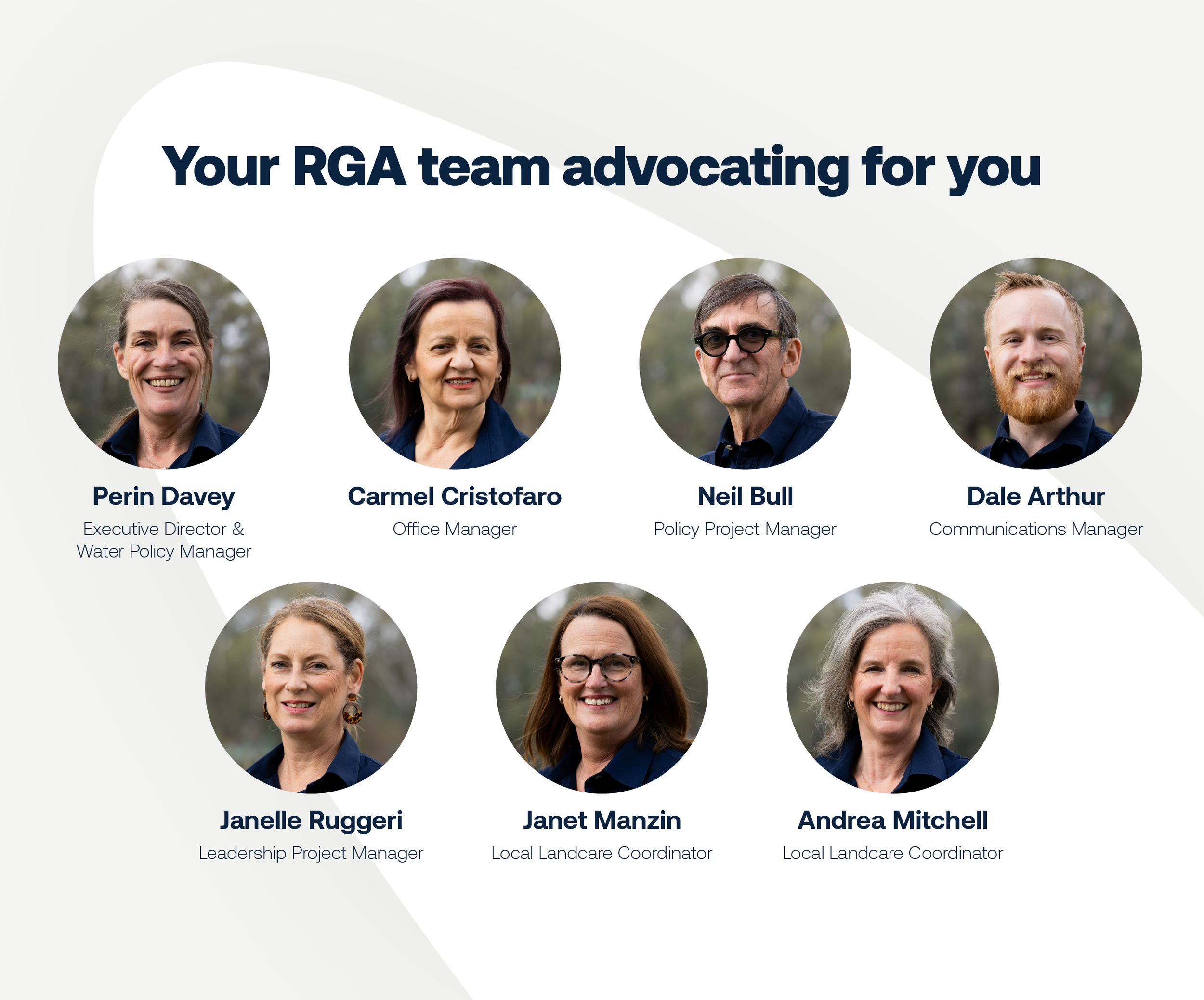
I also congratulate Perin Davey on her appointment as Chair of the NFF water committee, a role Perin is well equipped for with her extensive knowledge and experience in advocacy and water policy. Two fantastic wins for the Australian rice industry and agriculture overall.
In the past month I have travelled to Canberra for the National Irrigators’ Council AGM where the message is as clear as ever, it is time to move beyond “just adding water”. The basin has changed and after 30 years of reform, 1 in 3 litres has already been removed from farming.
Moving forward we anticipate and prepare for Snowy Water Inquiry Outcomes Implementation Deed (SWIOID) review in the coming weeks as well as a draft Water ACT review report expected to release in November.
The RGA is prepared, as always, to advocate strongly for our members and our region. We will continue to engage constructively, ensure our voice is heard, and push for evidence-based decisions that recognise the value of irrigation to our communities, our economy and our food production.

Executive Director’s Update
Perin Davey
Executive Director, Ricegrowers' Association
October has been another busy month ensuring the voice of ricegrowers and the regional communities they support continues to be heard in national discussions.
I attended the National Irrigators' Council General Meeting, where water policy and Basin Plan implementation remain key topics of discussion. With all the reviews currently underway it is crucial the irrigation sector has a united voice.
Federal Water Minister, Senator Murray Watt hosted a stakeholder roundtable in Leeton - the first visit by a Labor Water Minister to the Riverina since Tony Burke in 2012. The meeting provided an important opportunity for local representatives to outline the cumulative impacts of more than 14 years of Basin Plan implementation, alongside the broader impacts of decades of water reform.
Participants were united in emphasising the need for future policy decisions to recognise both environmental outcomes and the ongoing capacity of regional communities and industries to adapt.
At the time of writing, I will be attending the National Farmers' Federation Members' Council where I will be confirmed as the new Chair of the NFF Water Committee. Other key issues on the agenda include agricultural workforce participation, future visa settings including backpacker and agricultural worker arrangements, and ongoing trade negotiations with the European Union. These issues will play an important role in shaping the competitiveness and future growth of Australian agriculture.
Overall, the month has highlighted the importance of continued advocacy to ensure national policy settings support productive, resilient and sustainable regional industries.


Water Matters
The RGA has recently lodged submissions on two important water policy reviews with significant implications for irrigated agriculture across the Murray-Darling Basin.
The first submission responded to the Murray-Darling Basin Authority's Draft SDL Adjustment Mechanism (SDLAM) Determination.
While acknowledging the identified shortfall in expected supply measure contributions, our submission argued that pursuing further water recovery is not the solution.
Communities and irrigation industries have already contributed substantially to Basin Plan water recovery and therefore, we argue future policy should focus on improving environmental outcomes through better management, delivery infrastructure and environmental watering practices, rather than additional buybacks. It also calls for greater support for complementary environmental works, including local programs designed to fix local problems.
The second submission was for the Inspector General of Water Compliance's inquiry into metering across the Basin.
There is a need for nationally consistent compliance arrangements as the current system of states reporting compliance against their own standards is equivalent of comparing apples to oranges.
The submission highlighted the importance of transparent water accounting, improved verification processes and greater consistency across jurisdictions, while cautioning against reforms that simply increase administrative or regulatory costs for water users.
Together, these submissions reinforce the RGA's long-standing position that effective water management requires practical, evidence-based solutions that deliver environmental outcomes while supporting productive regional communities and agricultural industries.

Native Game Bird Management
Rice growers seeking to control protected native waterbirds (excluding ducks) that are causing crop damage must now apply through the NSW Biodiversity and Heritage Regulator.
Approvals are only considered where growers can demonstrate significant damage or economic hardship and have investigated reasonable non-lethal management options first. Growers should contact the regulator before applying and be prepared to provide details of the species involved, the damage being caused and the deterrent measures already trialled.
Native ducks continue to be managed through the DPIRD Native Game Bird Management Unit, while purple swamphens (bald coots) remain unprotected in NSW rice-growing areas.
NGB FAQ’s – including information about the 2026-27 quota report
How to apply for a native game bird management licence video
Inquiries and Questions: gamebirds@dpird.nsw.gov.au
Biodiversity and Heritage Regulator licences to Protect rice crops
The NSW Government now requires rice growers to apply to the Biodiversity and Heritage Regulator to cull native water birds other than ducks that are damaging rice crops. Previously these licences were handled by NSW National Parks and Wildlife Service.
The RGA has Communicated with the Biosecurity and Heritage Regulator regarding timely issuing of licences. The legislation behind this program requires them to quote four weeks to receive approval. They have assured the RGA that they will approve licences in as shorter time period as possible.
Note: Native duck species are handled by the DPIRD Native Game Bird Management Unit and purple swamp hens aka bald cootes are unprotected in NSW rice growing areas.
Guide for rice growers to obtain a licence
When may a licence be considered?
Protected native animals pose a demonstrated serious threat to human safety.
They are causing property damage.
They are causing economic hardship.
Reasonable non-lethal measures have been investigated and, where practicable, implemented.
Control is intended as a last resort. Depending on the licence, authorised harm may include trapping and euthanising, catching and releasing, or killing. The licence will specify the species, number, method, location, authorised persons, period and other conditions.
How to apply
Contact the Biodiversity and Heritage Regulator before lodging the application to discuss the issue, its severity and non-lethal options.
Gather evidence: identify the species, describe the threat or damage, estimate numbers, record dates and locations, and document deterrence or exclusion measures already tried.
Prepare property information: for a first application, or after boundary changes, provide a Local Land Services rates notice and a property map to verify ownership or occupation, size and address.
Nominate authorised people and methods: if shooting is proposed, provide a copy of the nominated shooter’s firearms licence and any other requested details.
Complete and lodge the application with all required declarations and supporting documents. Additional information may be requested during assessment.
Wait for written approval: do not harm protected native animals unless and until the activity is lawfully authorised.
Quick Checklist Before lodging
Confirm the animal is protected and identify the correct species.
Confirm this is the correct licence pathway.
Describe the safety threat, property damage or economic hardship with supporting evidence.
Record non-lethal measures tried and why they were insufficient.
Attach the property map and Local Land Services rates notice where required.
Provide details of each nominee and proposed control method.
Include firearms licence details if shooting is proposed.
Plan how licence records and the final return will be completed and submitted.
Official information and contact
Biodiversity and Heritage Regulator
Phone: 1300 173 376
Email: bhr.control.licensing@dcceew.nsw.gov.a

Upcoming Leadership Opportunities
Murray Darling Basin Leadership Program
Cohort 3 applications open!!
Session 1: Mildura, VIC, 26 – 30 April 2027.
Session 2: Canberra, ACT, 27 September – 1 October 202
Murray–Darling Basin Leadership Program
Australian Rural Leadership Program
Webinar for Course 34 - find out details about the course including dates, program and details etc.
Wed 28th Oct 4-5pm

AgriFutures People & Capability Grants Open
Applications are now open for Round 2 of the AgriFutures People & Capability Program, with funding available to support workforce development, leadership, training and capability-building initiatives across Australian agriculture.
Three funding streams are available:
Industry Workforce Program Grants of up to $25,000
Capacity Building Grants of up to $10,000
Cross-Sector People & Capability Grants of up to $40,000 for projects addressing shared challenges such as AI and digital transformation, workforce diversity, workplace safety and food security.
Applications close 27 November 2026. Members and organisations with ideas that could strengthen industry capability, leadership or workforce development are encouraged to apply. Find out more and apply via the AgriFutures website.
AgriFutures Rural Women's Award Applications Open
Applications are open for the 2027 AgriFutures Rural Women's Award and Acceleration Grant, supporting women who are driving positive change across rural, regional and remote Australia.
The Award provides funding, leadership development opportunities and access to a national alumni network, while the Acceleration Grant supports women with an idea, cause or vision to build their skills and create impact within their communities and industries.
Members are encouraged to apply or nominate a candidate through the Champion Her pathway, which recognises women with strong leadership potential and a passion for making a difference.
Applications close 4 November 2026 (20 January 2027 for NT applicants). Visit the AgriFutures website for more information and application details.

NSW Landcare Conference Sustainable Rice Tour
The RGA Landcare team lead a tour of 30 land carers from across NSW on a tour to John Bruce's (Farmer JB on YouTube) farm near Barooga.
The tour included presentations from Rebecca Groat highlighting SunRice's sustainability initiatives, and Russell Ford describing The Nice Rice approach to sustainability.
John explained his irrigation farming practices and why he grows rice. Other subjects covered included; Bitterns in rice and the broader rice habitat. Feedback from the participants was very positive with many questions asked.
Make Your Own Biofertilizer
Join Daniel Hodges of Soil, Water & Plants and WMLIG for a hands-on workshop on brewing your own biofertilisers. You'll learn the fermentation basics behind these brews and how bacteria help chelate minerals, keeping them available to your plants instead of locked up in the soil. Work through practical recipes, including cow-based and EM (effective microbes) biofertilisers, and learn how to scale up, swap in alternative ingredients and apply the results with the right rates and timing.
Date: Friday the 13 November
Time: 8.45am - 4pm
Location: TBC, Near Barham
Information: Clare Trezise 0400693018 or email clare.trezise@wmlig.org
Bring: Covered Footwear & Chair

Business internet or Home internet
What's right for you? For many small businesses, especially those operating from home or across regional communities, a reliable internet connection is essential to staying productive, connected and ready for growth.
While a home internet plan may be suitable for everyday household use, business internet is designed with business needs in mind. That can include support for bandwidth-heavy tasks such as video conferencing, uploading and downloading large files, accessing cloud-based systems, using AI tools and keeping teams connected.
For businesses that rely on digital tools, customer communication or online operations, the right internet plan can make a real difference to performance and reliability.
Telstra’s Smarter Business article explains the key differences between business and home internet plans, including speed, support, reliability and the features that can help businesses operate more efficiently.
It is a useful read for local business owners reviewing whether their current internet setup is still the right fit.

NSW Farm Safety Training Forum: 11 November, Hay Services Club | 9am - 3.30pm
Register: Ben Holmes 0474 441 281 or bholmes@mintrac.com.au