
Rice and Water

The average irrigation requirement of a rice crop is 6-7 megalitres per hectare.
Australia’s rice industry is among the most water-efficient in the world.
Water-use productivity by Australian rice growers has improved by 52% since 1997.
Introduction: Why Water Matters in Rice Production
Water is the lifeblood of agriculture, and its importance is more than evident in rice production. Every grain of rice begins with access to reliable water, making it one of the most water-dependent crops in the world. For Australian rice growers, water isn’t just a resource – it’s the foundation of their livelihood and a critical link in the global food chain. Without it, they cannot plant, harvest, or help feed the 40 million people who rely on Australian rice every day.
Water Requirements for Rice Growing
The amount of rice that can be grown is directly tied to water availability. Like all farmers, rice growers are vulnerable to drought and fluctuating water supplies. Each year, state governments assess dam levels and allocate water based on a priority system. Most rice is grown by general security irrigators, who sit at the lower end of this hierarchy. As a result, they receive their water last and are the first to face reductions during times of shortage.
Australian Rice Industry: Efficiency and Innovation
The Australian rice industry is among the most water-efficient in the world. Australian rice growers use around 50% less water compared to the global average, while consistently delivering high-quality temperate rice varieties suited to Australia’s climate. Contrary to popular belief, rice uses far less water in bulk than many other agricultural products.
Internationally, Australia ranks in the top four for water efficiency per hectare. Importing rice from developing countries would shift demand to regions where water resources are already under significant pressure, making local production a more sustainable choice.
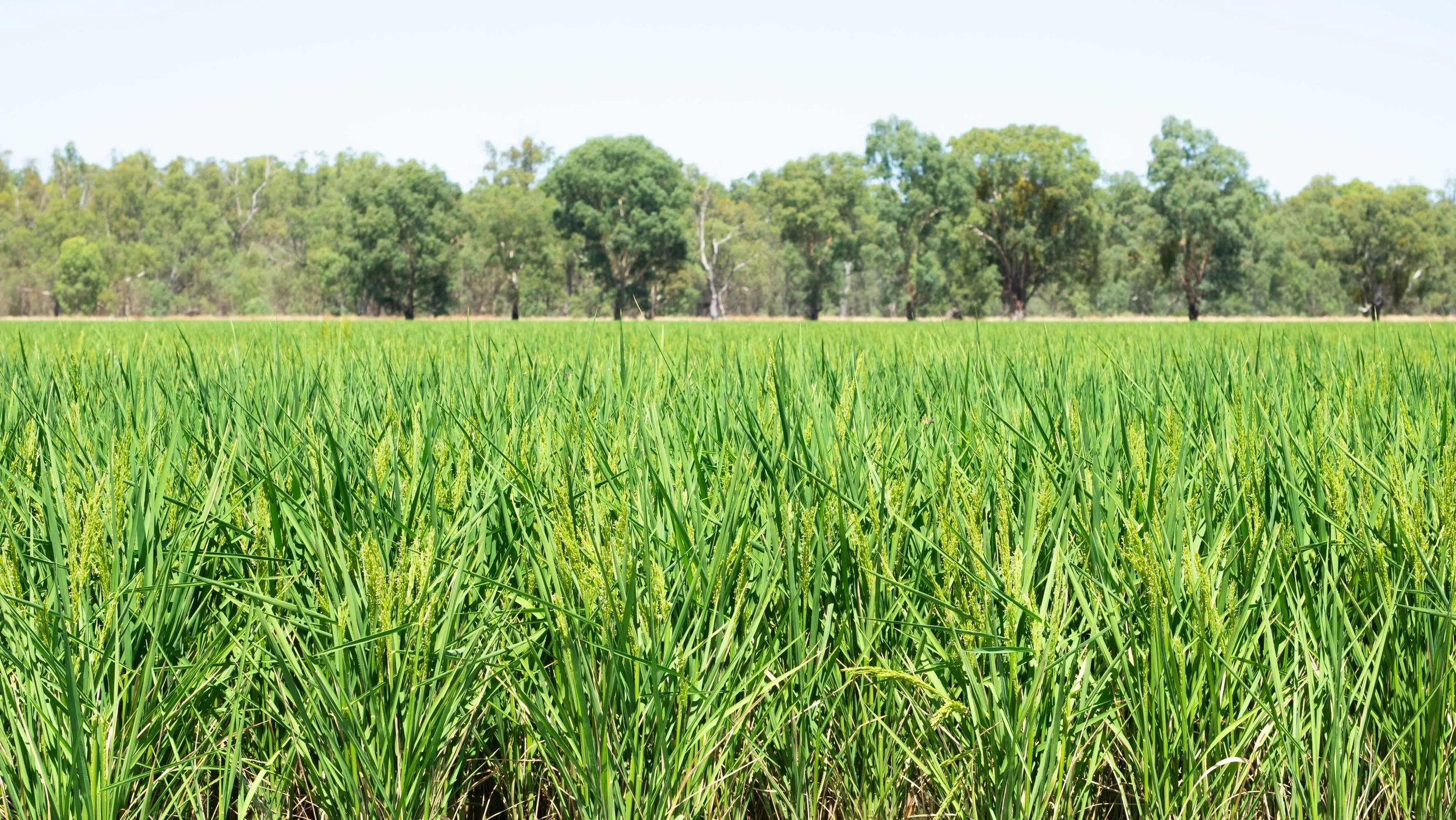
Water is a vital resource used in farming.
The production of food and fibre is dependent on water and rice growers know better than most, the real value of water. Without it, Australian rice growers can’t plant a crop, make a living or continue to grow the rice which feeds up to 40 million people around the world every day.
Water footprint of some agricultural products
Water Efficiency in Farming Systems
Rice is just one component of a broader farming system. Each season, Australian farmers decide which crops to plant based on water allocations and seasonal conditions. Rice is grown from October to March and rotated with crops such as wheat, barley, and maize. Many of these rotation crops benefit from residual soil moisture left after rice harvest, often requiring little or no additional irrigation. This approach maximises water efficiency, effectively delivering two crops from a single water application.
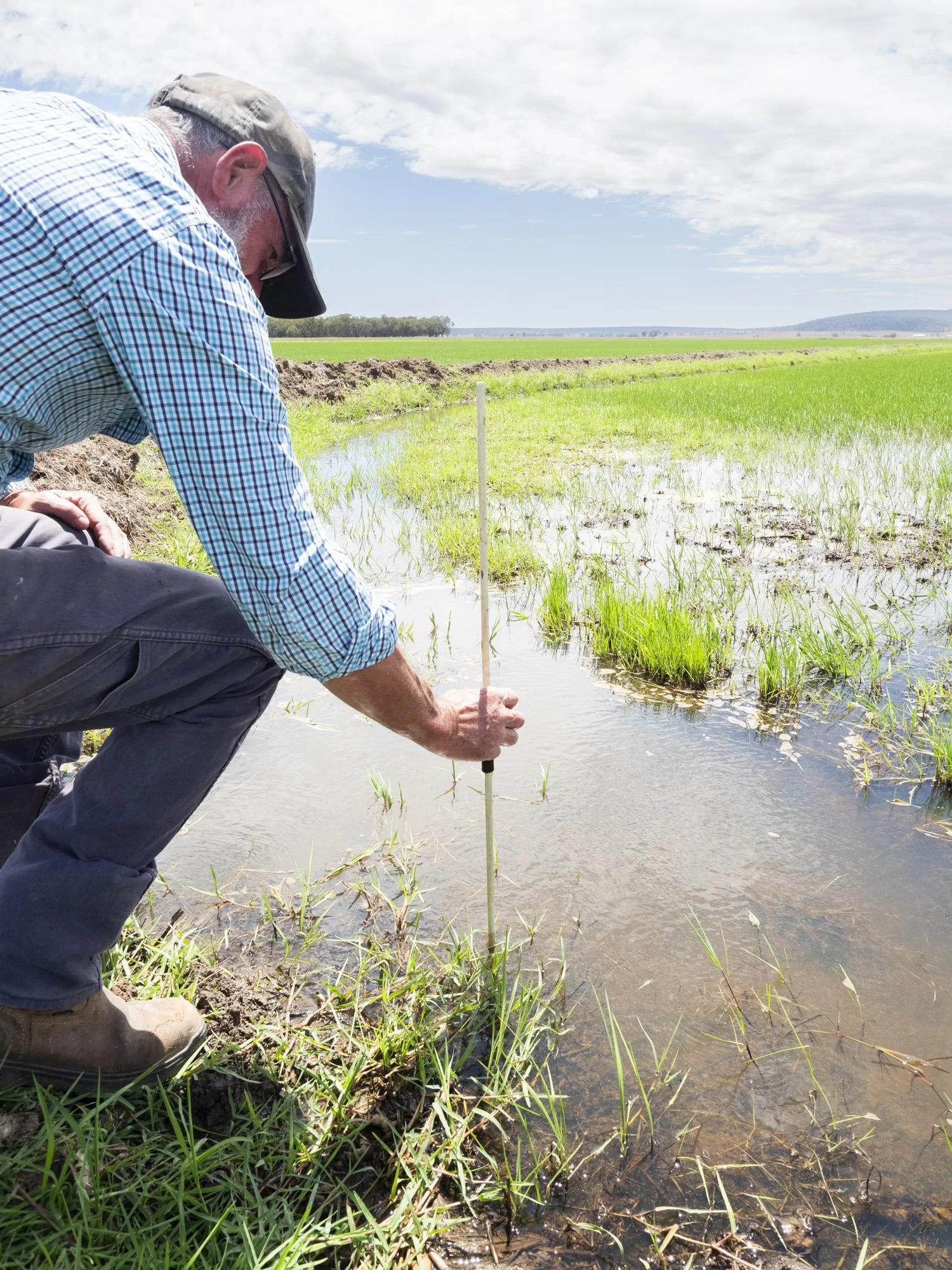
Traditional vs Modern Irrigation Practices
(Compares conventional flooding with newer methods like aerobic and automated rice)
Rice Varieties and Climate Adaptation
Rice grown in Australia is uniquely adapted to our climate. Unlike the tropical varieties common in Asia, Australian rice has been specially developed for the conditions of southern New South Wales – the heart of our rice-growing region. Almost all Australian rice is Japonica, a variety perfectly suited to the dry, temperate micro-climate of the Riverina.
Rice falls into two main types: Japonica and Indica. Japonica thrives in temperate climates such as Australia, California, Egypt, China, and Japan. Its grains are round, and when cooked, the rice is moist and slightly sticky. Indica, on the other hand, is grown in hot, tropical regions like India, Thailand, Vietnam, and southern China. Its grains are long, and when cooked, the rice is fluffy and separate. This distinction highlights why Australian rice is different—and why it consistently delivers premium quality suited to our environment.
Environmental Management and Sustainability
Careful water management is essential to balance productivity with environmental sustainability. Land and Water Management Plans, developed by state governments in partnership with rice growers, form the cornerstone of environmental initiatives in the Riverina. These integrated strategies are prepared by landholders and local communities with technical and financial support from NSW and Federal governments.
The plans outline best practices for irrigation farming, soil and water management, and biodiversity restoration, ensuring the land remains productive and healthy for future generations.
Importantly, ponded rice fields provide critical habitat for a range of species, including the endangered Australasian Bittern, which relies on rice crops for breeding and feeding. These wetlands also support frogs and other waterbirds, making rice farming a vital contributor to biodiversity in the region.
Economic and Policy Considerations
(Looks at water allocation, pricing, and government regulations.)
(body)
Outlook: Adapting to Climate Change
(Explores the ways rice farming may evolve with changing water availability.)
(body)